
Yoga Work In Real Time.
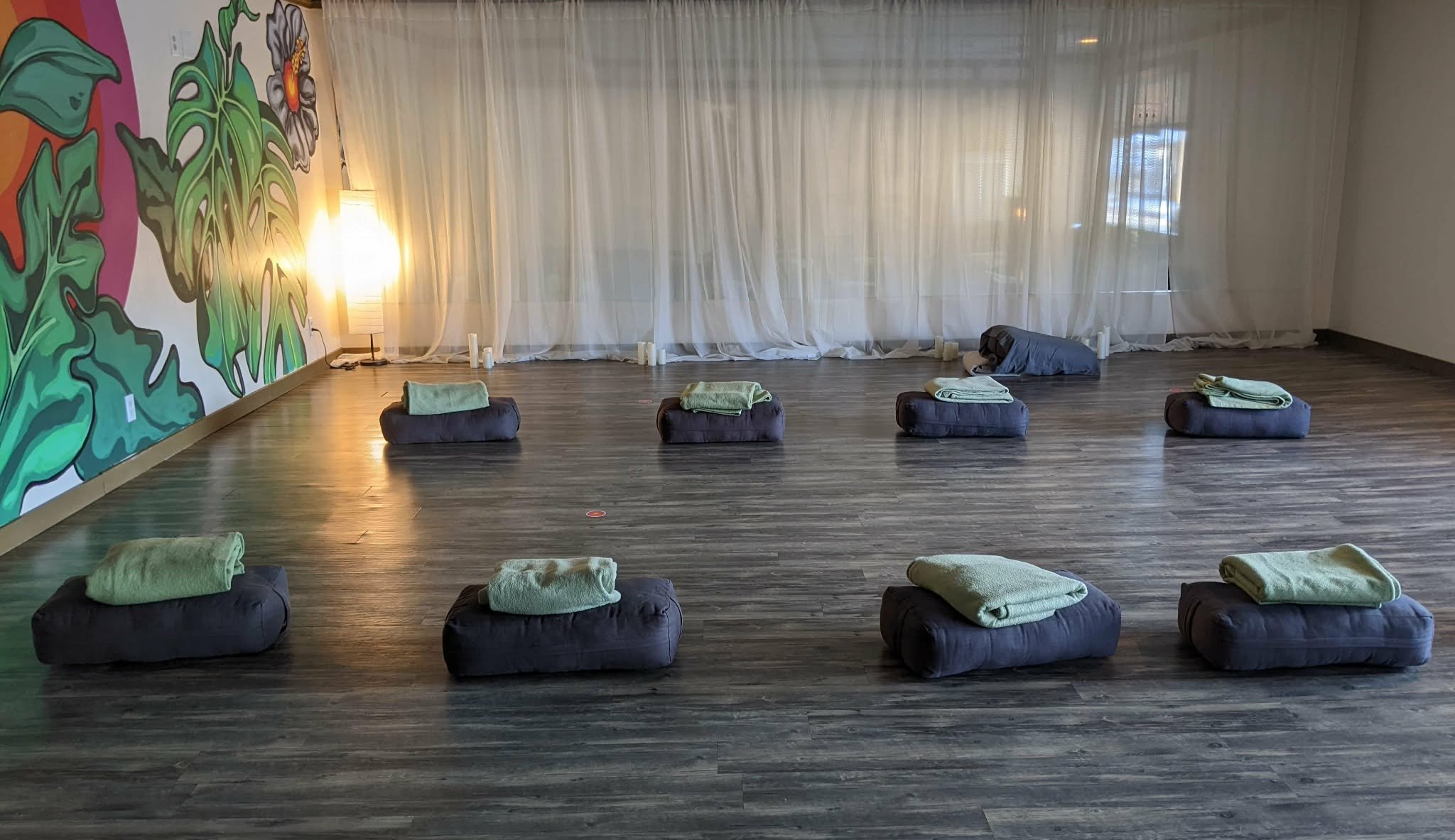
Photograph by R. Sebastian
It used to start with a 5:30 a.m. flow class. Then maybe you’d catch the 9 a.m. class for beginners. If you were lucky, you might get a little mini-practice for yourself in between shoving mouthfuls of granola and yogurt — food you snuck into your bag while dragging your sleepy self out the door.
After the 9 a.m., maybe it was home, or maybe you had a noon gig. After that: naps, catching up on emails, trying to remember to shove some salad in your mouth for lunch before heading to a 4:30 p.m., 6 p.m., and 7:30 p.m. class. Then home. It’s 9 p.m. now, and you’re collapsing on the couch to watch some TV you feel mildly guilty about — because you know you should be re-reading your Sutras for next week’s workshop. But you’ve had a long day, and you made approximately $150.
That was the life many of us lived in the early 2010s, teaching 15–25 classes a week to make ends meet. Those classes were how we cobbled together some form of a living, making around $300–$600 per week — and we were the lucky ones. We got to live and share our passion. We got to connect with students, and, hopefully, help people live lives they loved.
That was the life many of us lived in the early 2010s, teaching 15–25 classes a week to make ends meet.
And that kind of work… it doesn’t exist now.
If you did manage to teach five classes in a day today, you might make closer to $200 — maybe more if your studios are doing well or you have independent classes outside a studio environment. But most yoga teachers now are lucky to get seven classes a week, and for many people, that already feels like a lot.
In those days, if you were a yoga therapist, it felt relatively easy to connect with people who wanted to know more about yoga, or who wanted a more personal experience of their practice — and who were willing to pay more for your one-to-one, undivided attention. I remember people coming to me for yoga therapy sessions with the express intention of learning how to adapt poses to their own bodies so they could attend public classes safely.
Those people often told their friends. Eventually, you’d get that one friend who hadn’t slept well in five months — the one you taught yoga nidra to. For the low, low cost of $70, they got a solo session and a moment of rest.
That’s what people now often refer to as “the good old days.”
What was once difficult now doesn’t even add up to paying rent or utilities.
Today, our experience of working looks very different. It’s difficult to stack classes throughout the week, especially as the cost of living has risen so dramatically over the past decade. Supporting yourself on the wages from seven to ten classes a week is no longer possible. What was once difficult — requiring sacrifices like no cable TV and cooking most of your meals — now doesn’t even add up to paying rent or utilities.
On top of this, we’re teaching a system of being that has a powerful impact on the nervous system during a time of cultural upheaval and uncertainty. The modern yoga professional isn’t just teaching poses — they’re managing instability, cultivating connection, and redefining what meaningful work looks like in real time.
The modern yoga professional isn’t just teaching poses — they’re managing uncertainty, cultivating connection, and redefining what meaningful work looks like in real time.
Real talk.
The overhead for even the most basic yoga professional has increased considerably in the past five years. COVID pushed us online almost overnight, resulting in a boom in athleisure sales that those companies will never be able to repay.
Now, if a yoga teacher or yoga therapist wants to work independently from the studio model, they’re taking on rent, software subscriptions, Zoom payments, insurance costs that continue to rise, music licensing fees (SESAC, ASCAP, BMI), and the transportation costs of getting from place to place. And if you’re teaching online from home, you probably need more than the most basic internet package — higher upload and download speeds so your class doesn’t freeze mid-sentence.
Along with this, the 2010s trained our market to believe that yoga happens in studios. So if you work without a studio as your home base, it’s often harder for companies and outside organizations to take you seriously — especially if you don’t have a strong digital presence through social media and a website.
In 2025, yoga professionals have to be business owners. And owning a business — even one without permanent rent — is expensive.
Our experiences mirror the larger gig-economy realities of creative work. We’re grateful for flexible schedules and deeply purpose-driven work, but the stability is precarious. One class that doesn’t land, or a sudden drop in attendance, means something else in your personal budget gets cut. And there isn’t much left to cut. Vacations, especially, are often out of reach.
I worry sometimes about our lack of vacations. There’s that quote — build a life you don’t need a vacation from — which I agree with in principle. But I worry we’re not allowing ourselves the full experience of rest. Burnout from gig work is real, and when we don’t earn enough to take a break without worrying about financial fallout, that reality does something to the nervous system — something yoga alone cannot mend.
Add to this the fact that even when we enjoy our jobs, it can be difficult to exist in public as ourselves. Being a yoga professional comes with a specific set of expectations. I remember the first time I walked into a restaurant — a Panera Bread of all places — after teaching 15 classes a week, and saw two regular students chatting at a table.
I liked both of these women. When they saw me, their faces lit up, excited to meet my very young son, who was with me. And then… they hid their cookies. I watched them quietly slide napkins over their plates so I wouldn’t see they were eating something “bad.”
I have never subscribed to food shame, and I will always eat a cookie — especially if it’s chocolate. Both women knew this. They’d been taking my classes for years. But in that moment, I realized they had expectations of how I would behave in public, and they felt compelled to mirror it — the same way they mirrored trikonasana in class.
So I joked about promising not to steal their cookies and went to buy my own. I bought three: one for me, one for my son, and one to take home. Because I’m fairly certain there’s no sutra forbidding chocolate chip cookies.
That was the first time I realized that even when I wasn’t working, I still needed to be “on” — to embody the wellness figure people expected. That pressure intensified tenfold when I opened my own brick-and-mortar studio. Now I wasn’t just a yoga teacher; I was a business owner. And any business owner will tell you — we’re careful in public. We know that if we lose our composure in the grocery store and someone recognizes us, we might lose customers.
Is that fair? Of course not. But it’s real.
No wonder yoga teachers need vacations. That’s a lot of pressure to be “well” all the time.
No wonder yoga teachers need vacations. That’s a lot of pressure to be ‘well’ all the time.
Technology and Presence
There’s a reality many of us struggle to reconcile. Yoga requires presence — full engagement with our own lives, our bodies, the moment we’re in. Running a business requires a digital presence, which often feels like the antithesis of being present.
We feel the disconnect: being real, while also curating “real” in a profoundly unreal digital landscape.
Yoga requires presence. Running a business requires a digital presence — and the two often feel at odds.
We build genuine friendships there, too — connections that matter. And still, we long for the moments when we can sink into a couch with a friend and a cup of chai and talk honestly about our work.
Technology also means learning yet another skill. We can shift easily between Sanskrit philosophy and contemporary language, track the experiences of students in a room and in tiny online boxes — and now we’re expected to manage scheduling software like tech engineers.
That software updates. Suddenly you’re excited about automated reminder texts — until you realize you also have to figure out how to set them up. In your “free” time between classes.
So how do we stay grounded when technology takes up more space in our teaching, our profession, and our lives? How do we maintain boundaries between who we are and who we’re expected to be online?
And who guides us? Our teachers — and their teachers — never worked this way. We are explorers, way-finders, and tired humans whose nervous systems need rest.
How We Hold Each Other
It’s a wild thing to be someone whose job is to support people through hard times — especially when those hard times are cultural, and we’re experiencing them right alongside our friends, neighbors, students, and colleagues.
People look to us for guidance. Often, yoga professionals have a way of letting wisdom fall out of their mouths, and people turn to us to remind them to breathe, move, rest, and come home to themselves. It’s a beautiful role — and a lonely one.
When you’re the one holding space, it’s easy to forget you need space held for you, too.
When you’re the person holding space, it’s easy to forget you need space held for you, too. Burnout, compassion fatigue, endless giving — these are the quiet shadows of our work. We teach balance and boundaries, yet often cross our own in the name of service.
Community care in yoga isn’t just about showing up for students. It’s about showing up for each other — teacher to teacher, studio owner to freelancer, therapist to therapist. It’s the check-in texts after hard classes, mentoring circles that keep us honest, and shared spaces where we can drop the professional facade and simply be people who love yoga and are trying to make it work.
Some of this care is formal — networks, cooperatives, unions, shared studios that distribute power more fairly. Some of it is personal — swapping subs, sharing playlists, reminding each other it’s okay to rest. These small acts of solidarity keep the ecosystem alive.
Yoga work in real time is human work. We’re navigating uncertainty, trying to stay rooted in a practice that asks for presence even when the world feels chaotic. Holding each other — in exhaustion, laughter, and joy — reminds us that this isn’t just an industry. It’s a community learning, day by day, how to care.
The Practice Behind the Work
If we’re honest, practicing yoga professionally can be harder than practicing yoga itself. On the mat, there are edges — a beginning and an end. In our work, there aren’t. Classes, clients, content, side gigs — it all blends together until we can’t tell where service ends and self begins.
Yoga gives us tools to hold this. Abhyasa — steady effort — reminds us that showing up is practice. Vairagya — non-attachment — asks us to release the idea that our worth is tied to numbers, algorithms, or productivity.
The real practice may be learning how to build a sustainable life inside systems that aren’t built for sustainability.
It’s hard to remember that when a Tuesday class is half full and the studio asks you to “promote more on Instagram.” But yoga teaches us to meet what is with compassion — grounding before reacting, breathing before deciding, resting before burnout.
The real practice may be learning how to build a sustainable life inside systems that aren’t built for sustainability. Rooting while the ground shifts. Practicing discernment, kindness, and collective care amid economic uncertainty. It isn’t easy — but it is real.
Yoga Work in Real Time
Yoga has always been practiced in real time — breath by breath, body by body. Our work is no different. We aren’t building static careers; we’re living them.
The gig economy has its challenges, but it also reflects impermanence. Nothing is fixed — not income, schedules, roles, or reach. What is fixed, if we choose it, is practice.
We can build this industry differently: slower, kinder, more relational. We can remember that yoga isn’t a product — it’s a practice we live. And we can hold each other, not as perfect teachers or entrepreneurs, but as humans trying to stay grounded amid change.
That is yoga work in real time.
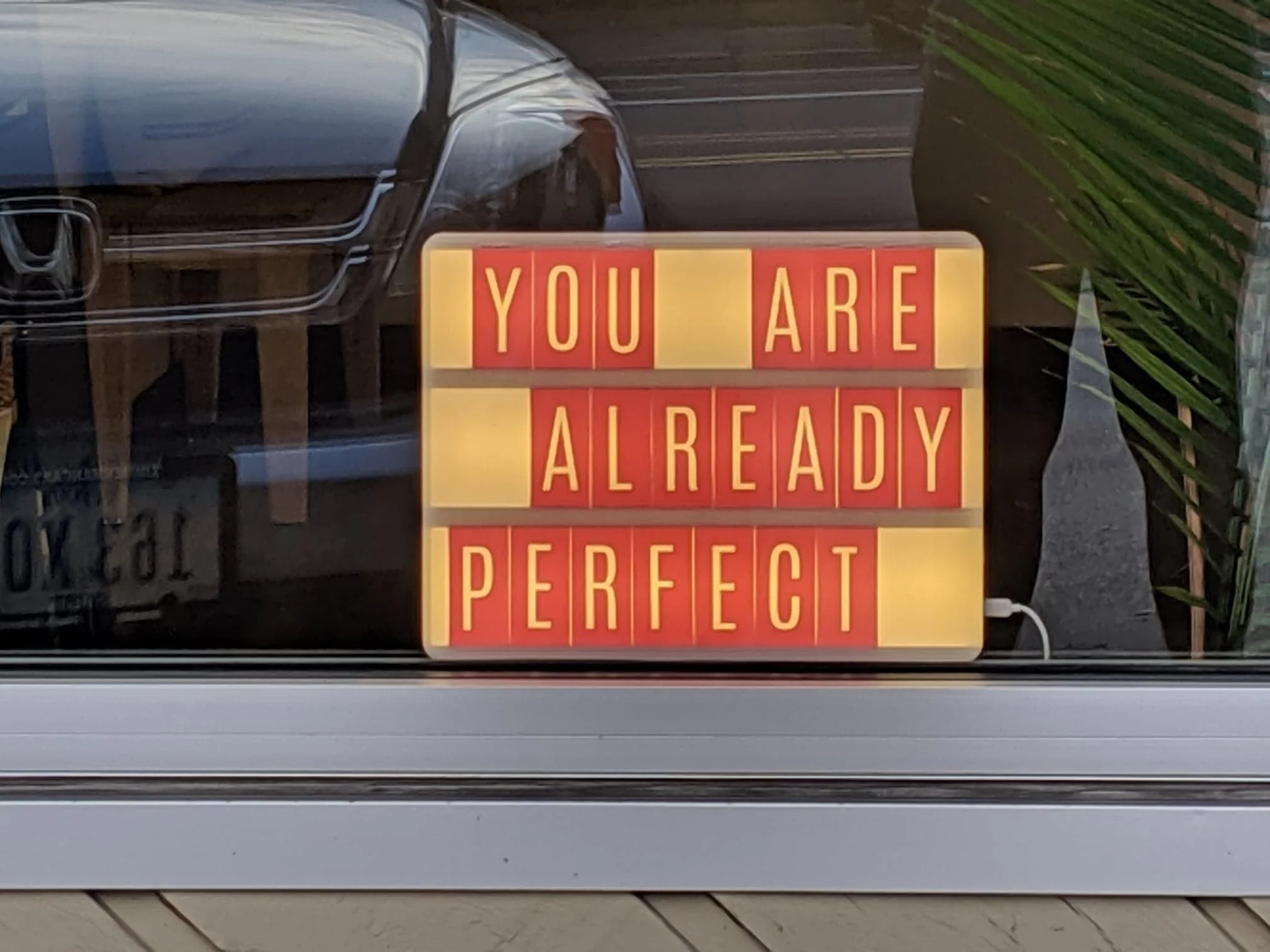
Photograph by R. Sebastian