
We Were Waiting For Leadership That Never Came.
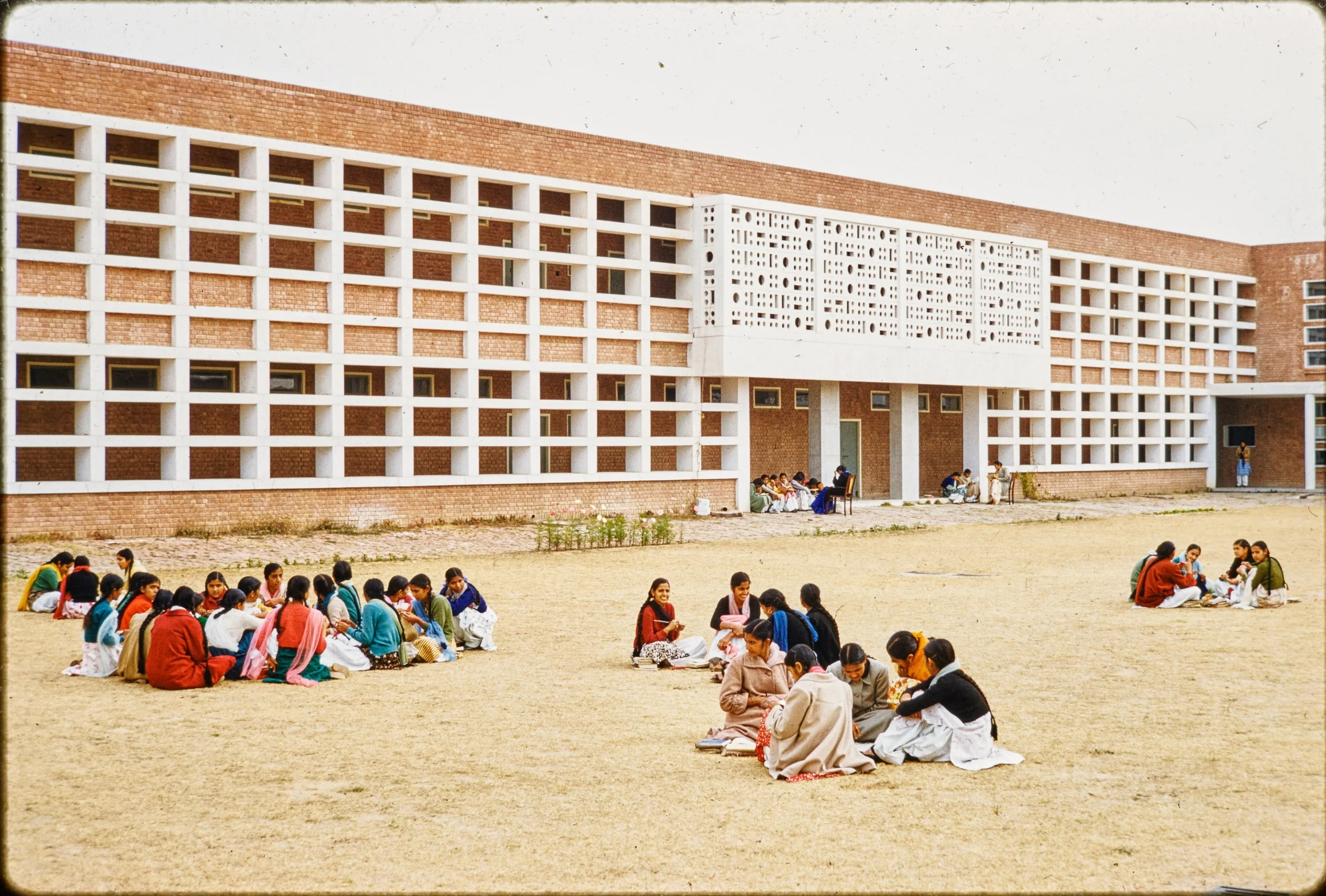
India--Chandīgarh--Schools--Unpublished image 1, n.d.
Hope can be exhausting.
In 2010 and 2011, I spent a lot of time, effort, money, and energy training to be a yoga therapist. After what was quite a lot of personal sacrifice to attend the 28 days of in-person, ashram-style training, I came back to my community, yoga therapy certificate in hand. Only to hear that a person who lived in my community finished a 300-hour teacher training with someone who was well known in the yoga therapy community, saying that her training and mine were the same because that teacher had told her so. Even back then, I started to lose a little bit of hope.
I had spent a lot of energy becoming a yoga therapist–a career path that was fairly new in the yoga space. Ironically, still called an “emerging career” by the International Association of Yoga Therapists in 2026, some 16 years after I trained. I was very disheartened to hear that someone who had taken a training not at all like mine felt she could say she did something similar to what I do.
I thought to myself “finally” in 2016 when the IAYT launched its official C-IAYT credential. NOW. Now people will understand what I do, and have some respect for the training I went through. Sadly, that also never happened.
Training and certifications had long become a substitute pacifier for real professional advancement. I was also acutely aware of the problem of building an industry that allowed people to make a living wage.
The Yoga Alliance, the dominant yoga organization at that time, had taken the official stance that yoga teaching was not to be seen as a full-time job. They decided that instead of building out the industry infrastructure that would help us scaffold into the profession’s future, they were just going to take a knee in advocacy for the professionals and focus on spreading the good word of yoga to the world. To this day, I have always felt this is a very interesting stance for a member organization that literally wouldn’t exist without the dues of the very people they said didn’t have real jobs. It also made me feel like my work was only valid to my personal students and me, with no one else in the world caring for or advocating for my future.
I had someone on my podcast from outside the US comment once that yoga organizations were all started by people who didn’t know how to build their careers in yoga, so they built organizations that would force people to buy their training. Based on what I have seen, truer words have never been said.
What We Thought Leadership Would Look Like
Many, if not the overwhelming majority, of us have had some professional experience outside the yoga space. Even I, who has been teaching yoga almost exclusively since I was in my early 20s, had a short-lived career in the non-profit space.
So we came into yoga with the very reasonable assumption that organizations like the Yoga Alliance, International Association of Yoga Therapists, British Wheel of Yoga, and others would do the typical things that trade organizations do. They would advocate for our work.
They would work to modernize the profession and honor the path of yoga. They would build trust with the public and accountability systems that keep both us, the practitioners, and the public safe.
They would name our economic realities honestly and work with us to improve the industry, co-creating some kind of future together. This assumption wasn’t wrong. We thought those things based on the care language, certification signaling, and professionalization language–that this kind of professional path is what we were paying for.
A $90 yearly membership fee isn’t much to someone who has a clear professional path. That conversation is entirely different when we ask $90 a year from someone who makes around $15,000 yearly with no clear direction to double that amount. Let alone move that amount closer to the national median for income. For a bit over .5% of someone’s annual income, there should be some care, advocacy, and accountability put in place so that people can use their dollars to further their careers.
Many of us put off advocating for our own work, especially in the yoga therapy space, where promises were explicitly made by the major organization at conferences and in magazines that people were “working on it”.
Advocacy for a new profession is a lot of work, a lot of connecting, a lot of lunch-and-learns, a lot of “can I buy you a coffee?”s. It was reasonable to expect that the organization you paid from $90 to $120 a year to would then support this process, or even spearhead the effort. Especially when that organization’s annual income has been reported at over $1million dollars. I look at that number and think, ‘Well, at least one of us should be able to buy lunch.’ But that someone isn’t me.
Their silence is a choice.
The Silence
Sometimes, no answer is an answer.
At least that is what they tell you in dating circles when women are trying to determine if the men they are seeing are really into them.
I have often thought of the leadership of our yoga orgs as a bad boyfriend, whom we see potential in, but that potential never really pans out. Instead, we get late-night “are you up?” texts, last-minute plan cancellations, and conspicuously no opportunity to meet their friends.
In an organization’s case, the largest silence there ever was is the silence that follows a sexual misconduct allegation in the yoga space. Call the police is the only advice ever given, with no professional accountability path in place for perpetrators of crimes.
A few organizations will say there is a committee in place, a protocol, an idea, or a wisp of a dream. But the reality is that protocol does not matter if it is not publicly available and transparently accountable. The actions of prominent teachers and trainers who built major programs, harassed their staff or students, and went on with little to no consequence to propel their careers forward are astounding.
Their silence is a choice.
Silence also shows up in a reliance on community dialogue to do the work that institutions are designed to do. A reliance on us to keep each other employed and informed, with no real effort by any leadership to guide us, is telling.
There is often theater attached to that silence, and we have front row seats to this trick of the light. The theater of committees and task forces that go nowhere, and were never designed to. A committee can get together for weeks, months, even years; come up with policies and protocols that support the future of the profession, only to be disbanded and rebuilt in a more palatable way.
That is also silence. Not the silence of negligence. The silence of structural misintegrity.
What Waiting Costs Us.
How many times have you dated someone who felt incredibly uninterested in you, your work, and your experience–only for you to go home wondering ‘is it me?’. There is the same emotional and psychological cost to waiting for yoga organizations to value our work. This boyfriend is honestly the worst for us. I don’t know about you, but I think this situationship needs to fizzle out.
I have wondered many times where we got this pacifier, the idea that training and credentials would take the place of a professional path of any kind. When I take a closer look at organizations themselves, I do see that they, at the very least, also participate in this process. At the worst, they made us believe it was true.
This resulted in one of the biggest tragedies I have seen in our industry in recent years–the loss of talented labor. I have heard person after person, business after business…and these are people who were once highly invested in the practice and tradition of yoga, have had to leave the industry and take their skills elsewhere in order to make a sustainable living.
The cost of this is that we are left with people who are either just learning about yoga deeply, or people who do not care to learn the entire tradition and philosophy of yoga. Then we wonder why there is a lack of dedicated practitioners in the industry. The neglect of our professional path has made it impossible to stay.
I often think of the Facebook group I run, which is trying to navigate all these concurrent truths and also make a living. What I notice in that group is that navigating these realities requires not just hope, but a genuine capacity to process grief and loss. We were lied to, sometimes outright, and there is a collective grieving that must happen in order to move forward.
This desire to look towards organizations that promised us more than they gave also had real professional consequences. The innovation and unique working paths we could have started carving were completely stalled by this over-reliance on someone else to do the work of making a true profession. That fact is compounded by the reality that the people at the helm of these organizations are in no way actual yoga professionals of any kind. They are other things first–politicians, lawyers, executives, and then they moved those skills into the yoga space.
Can you imagine a farmers' advocacy group led by someone who wasn’t a farmer? A teacher’s union led by someone who had never taught in the classroom? Of course not. The idea is silly. And yet we accept that reality for us.
The “We Are Working On It” Myth.
The lack of transparency within our yoga organizations is something worth studying. Not only their lack of transparency, but also our willingness to accept that as business as usual.
For the last couple of years, both major organizations, The Yoga Alliance and The IAYT, have been working on standard revisions. This change in standards from both organizations nearly simultaneously will create huge ripples within the industry.
Neither organization has been forthright about the fact that standard revisions are happening behind the scenes, but both seem to be set to release in the next 12-18 months. Yet…yoga professionals of all kinds, from 200-hour new teachers to well-experienced yoga therapists who spent $25,000 on their education, cannot find meaningful and sustainable work.
So what is the point of improving standards for a profession that these organizations themselves resist acknowledging even exists?
Procrastination theater is a compelling show for both the actors and the audience. We can do anything except work on the one thing that would make the biggest impact. Because that one thing is also the most difficult, most nuanced, and the one issue our leadership understands the least. How on earth can we expect anyone to find us work when they have never actually done our work? Of course, they can’t; they wouldn’t even know where to start.
So, Who Were Our Actual Leaders?
Our industry advocacy and support were quietly outsourced to other individuals, without much fanfare. Because of the lack of industry expertise at the top of our industry hierarchy, the people who actually ended up leading the industry were those in the middle.
This is a huge burden of responsibility on the trainers, studio owners, and lead teachers who were already overworked, underpaid, and forced to build their own career paths from scratch.
This meant there was no universal language for what our industry expected; this talk from a yoga teacher trainer or studio owner was couched in personal narratives and pet peeves instead of actual industry experience and credibility. This then shifted the responsibility, once again, down one level on the professional ladder.
The individual, the lonely and often not-so-well-trained yoga teacher, was left to their own devices to find work and meaning within that work. The number of yoga teachers, freshly out of a YTT, who have ended up in front of me asking ‘What do I do now?’ or some version of that question, is heartbreaking. At first, I felt like we had failed them, but then I realized it was the organizations worth millions of dollars who claimed to represent the industry that failed us all. And for what? The ability to have people take their online webinar or 40-hour yoga anatomy certification?
What Happened Instead.
This is the part of the article where I remind you how much I love us. We are kind, intelligent, compassionate, and a little bit nerdy. And we, the yoga professionals, didn’t take this displacement of leadership responsibility lying down. We just did what we always do. We built a counter-culture alternative to generalized leadership.
We began to rely on peer networks, often online forums and chat rooms, to find camaraderie and support.
We built peer networks in our regions. We quietly had open studio hours with other yoga teachers that turned into 3-hour chats about working conditions, student challenges, and how this job sometimes makes you feel like you have nobody to talk to.
There was a lot of grief for us to process, sometimes together and sometimes alone, from the realization that nobody was coming to save us–professionally speaking. But also, we gained a competency around discussions of industry and infrastructure that people who paid $2000 and took 200 hours of training rarely have. We are an intelligent group of people, us yoga folks, but because we also all purposely chose an alternative path vs. the typical career path, we were able to innovate in our own local communities.
I am so proud of us for that.
The Danger Of Still Waiting.
But now, today in 2026, we know we need more.
We understand that we chose not to rely on the organizations that claimed to represent us, because they were unaccountable and untransparent at best, and unethical at worst. However, if we do nothing now, we sacrifice the ability to build a true professional path for everyone in the future.
And now we know better than to accept that outcome. Bad boyfriends be damned.
So we need to decide what is next.
Do we stay with the traditional hierarchical model of power and structure, or do we put our intelligent, caring, compassionate, and somewhat regulated brains together to build something new?
If we continue with the status quo, we not only risk losing ourselves, but we risk losing our industry. As our leadership continues to come from people who do not understand what it means to really do this job, we also see that they, the leaders of these organizations, lack the skillset and vision to change our trajectory.
Our choice is here. Make them irrelevant or wither and die on the vine as a profession.
Because there is one thing I know for sure. There is no shortage of people who want what we have to offer. Yoga is not “just a fad” of the intersection of fitness and spirituality that was popular in the mid-10s. It is an impactful practice that engages the whole of us to make our bodies, heads, and hearts a little bit better.
As the tagline of my studio said: “yoga helps”. And we are not the only ones who know it.
Leadership Reimagined.
So who leads us now? What characteristics are we looking for in organizations to help us step forward into the future?
Well, I just want to point out the signals that we need to be watching for as a new generation of leadership comes into influence.
Character matters more than charisma. As we look for new faces to emerge to take the reins of the industry, please look for character first. Do they show signs of deep internal practice? Do they understand the philosophy and ethics behind a long-time yoga practice?
Or are they just passionate? Because passion is amazing, a wonderful skill when it is developed properly. But passion and character are not the same thing. And at this stage in our profession, we need a structure that benefits the whole much more than we need another person with a savior complex.
But imagine something different. Something that encourages us to connect, see, hear, and listen to each other in the way we have all been craving for ages. Imagine having true colleagues and friends. Knowing that you have a voice–even if your opinion isn’t always the one that gets favored…you had a say.
Imagine that we didn’t wait for directives from on high to tell us that the standards that didn’t find us jobs before need to be stricter. We can’t find jobs now, but we should probably just study harder. Or maybe just add a new certification?
Imagine a future where our jobs and our leadership valued us, holistically.
That is something that I believe we can work towards, friends. And something that could set the trajectory for a sustainable future.
Stepping Into The Future Of Yoga
The leadership we needed was always going to have to be us.
We know our value, and now it makes sense for us to move forward without those organizations and leaders who do not really know or value what we do.
This article was originally published in Issue 1 of Inside Yoga Magazine, The Rebuild. Published April 2026.
Subscribe here to read the current issue of Inside Yoga and all of the previous catalogue.